
Net Zero Compute: Solving a Major AI Problem
Here, inside a hall between high mountains and by a cold fjord in Nordland, lies a potential Norwegian industrial adventure. The explosion in the use of AI tools is leading to a major problem. Stavanger-based Net Zero Compute wants to help solve it in collaboration with an international tech giant.
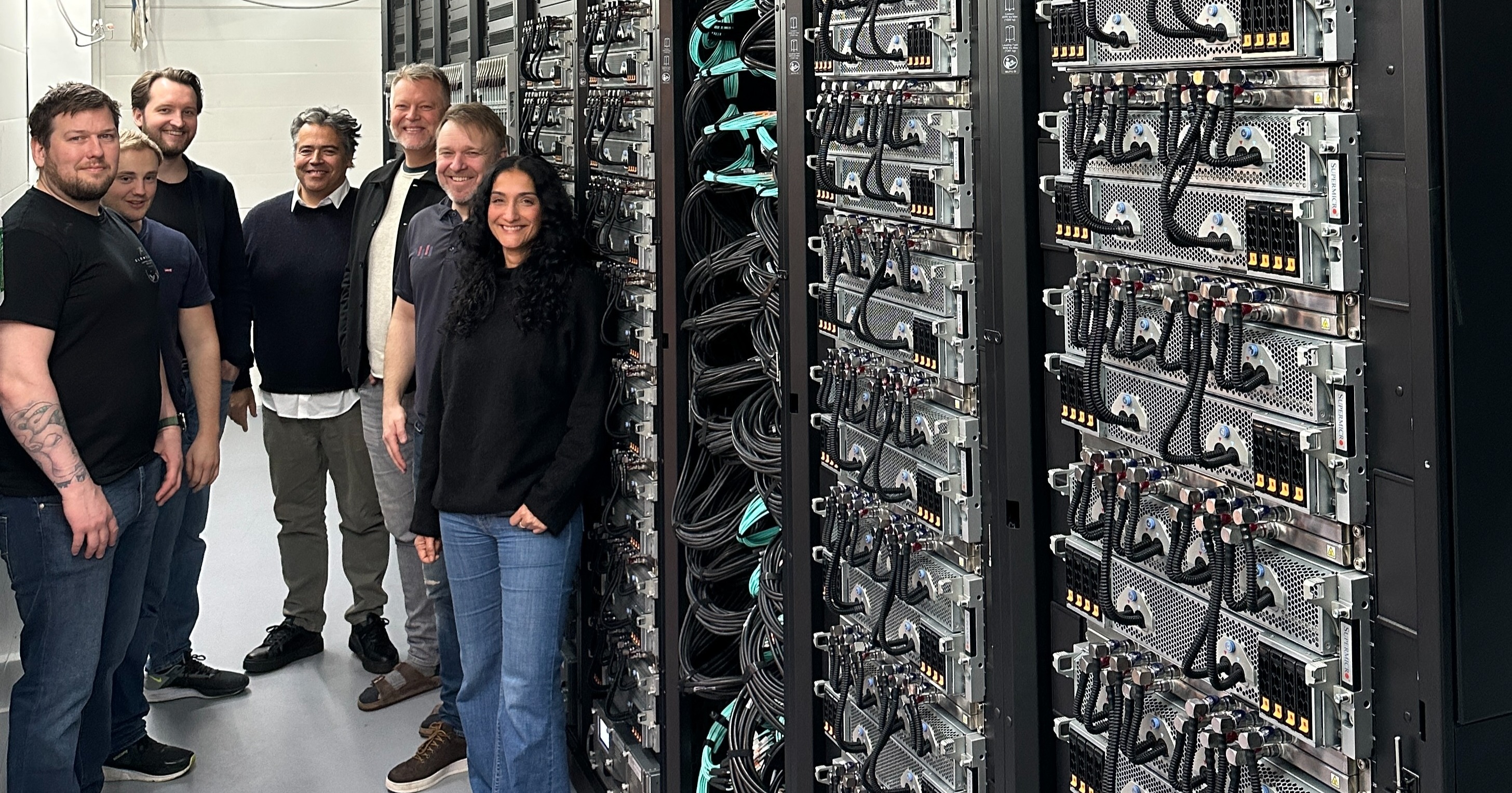
Pictured is half of the Net Zero Compute team, which will soon number 14 people. Farnosh Dalili closest to the camera on the right. Managing Director Tommy Varhaugvik is number three on the right.
- We are building a climate-neutral AI factory based on technology from Nvidia in Glomfjord in Nordland. The factory will open for customers at the beginning of April. We're looking forward to it! We're finally starting production for customers, something we've been working towards for many years," says Farnosh Dalili, key account manager at Net Zero Compute.
We'll get back to the groundbreaking AI factory, which is the first of its kind in Norway, soon, but first some context:
The use of AI services requires large amounts of computing power and energy, to say the least. For example, the daily ChatGPT traffic globally requires a power consumption equivalent to 25,000-30,000 European households in one day. This according to ChatGPT itself.
Have you thought about what happens when you get recommendations from Netflix? A large amount of data is processed. You get suggestions for shows and movies that Netflix thinks you'll like, based on past choices and advanced AI models.
You and I use AI models all the time, whether we realize it or not, and AI models require large amounts of computational power.
Power and heat
- Since 2017, Net Zero Compute has been working on developing a model for AI factories that are powered by renewable energy and make better use of the energy in the system. The servers in the AI factory produce a lot of heat. The heat can be included in a circular energy system where biomass and biowaste are converted into high energy. The energy can be used to produce energy, which in turn can power the AI infrastructure," Dalili explains.
The result is an AI infrastructure that operates with a circular energy system where energy, heat and biological resources are used as efficiently as possible.
Norway can become an AI country
Norway is described by many as one of the best places in the world for data centers and AI factories. This is because we have almost 100 percent renewable energy through hydropower, historically low electricity prices, stable governance, high data security and good internet infrastructure.
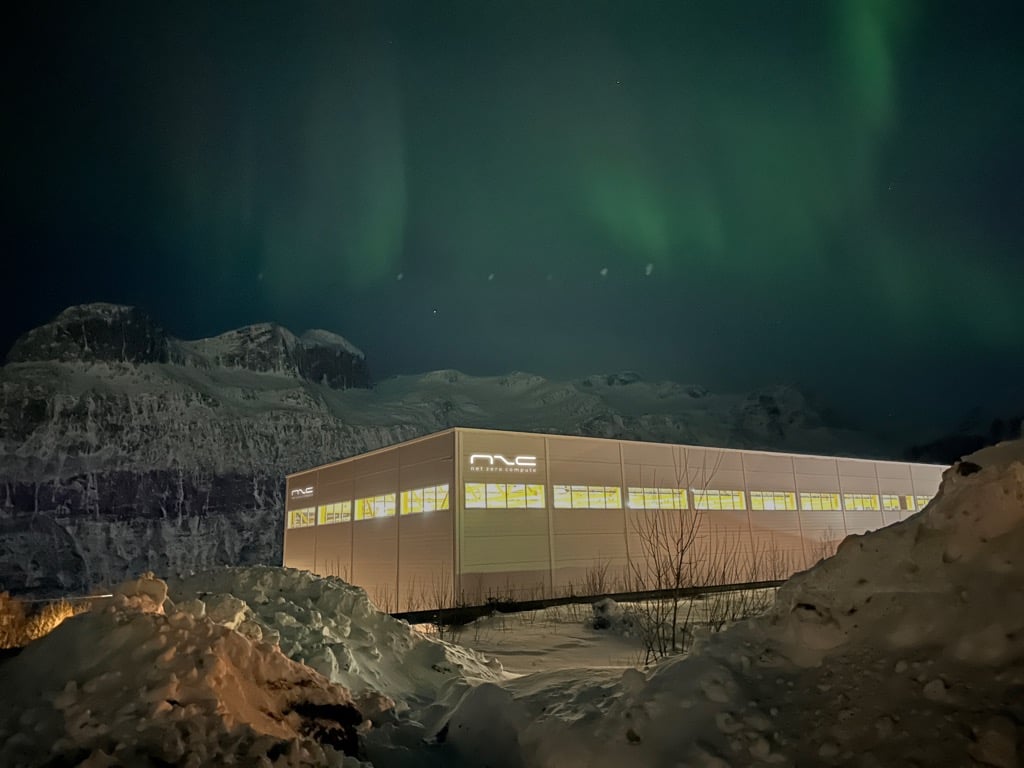
Image: The AI factory in Glomfjord in Nordland. Photo: Net Zero Compute
What's more, cold outdoor air and seawater for cooling are major advantages for this type of industry - and Norway has that in spades.
AI infrastructure, such as Net Zero Compute's new factory in Glomfjord, could become a new Norwegian export industry. However, there are major conflicts of interest. Skeptics point out, among other things, that data centers and AI factories use a lot of power and space.
Net Zero Compute, a member of Nordic Edge's Smart City cluster, has developed a model in which AI factories combine renewable energy, energy-efficient infrastructure and circular energy solutions to reduce the climate footprint.
- Net Zero Compute hits a niche in today's and tomorrow's need for computing power. The company develops modular AI factories that can be built in regions with access to renewable energy and biological resources. "The need for computing power will increase sharply in the years ahead. At the same time, the fact that Nvidia is a key technology partner in the project gives it great credibility," says Trygve A. Meyer, Head of Smart City at Nordic Edge.
Did you say AI factory?
But what exactly is an AI factory?
Imagine that traditional factories make products from raw materials. AI factories produce intelligent computing and AI services from vast amounts of data and advanced computing power.
An AI factory works continuously to turn data into insights and intelligent services at scale.
- We have big ambitions for the future. Together with technology partners, we are building the first factory in Glomfjord. Net Zero Compute has plans to develop several similar AI factories in different locations in Europe. We've only just started," says Farnosh Dalili.
AI factory explained in five points
- Large amounts of data are collected from sensors, databases, apps and digital systems.
- The data is organized and prepared for use in AI models.
- Powerful computers - often based on GPU technology - process the data and run advanced AI models.
- The result is AI services that are used in everything from industry and mobility to health, research and digital services.
- New data means that the models are continuously improved and updated.
- Many people compare AI factories to traditional data centers, but they are actually two different things. A data center stores and distributes data. An AI factory produces computing power that turns data into intelligence through advanced models," explains Dalili, who points out that many countries now want so-called "sovereign AI", which favors factories being built in Europe.
This means that critical AI infrastructure is subject to European legislation, the EU AI Act, not the US Cloud Act.
Become a member
Become part of the smart city cluster and gain access to networks, expertise, and events. As a member of the cluster, you get a partner dedicated to helping your company succeed.