
Out of the meeting room, into the field
Written by: Gunnar Crawford
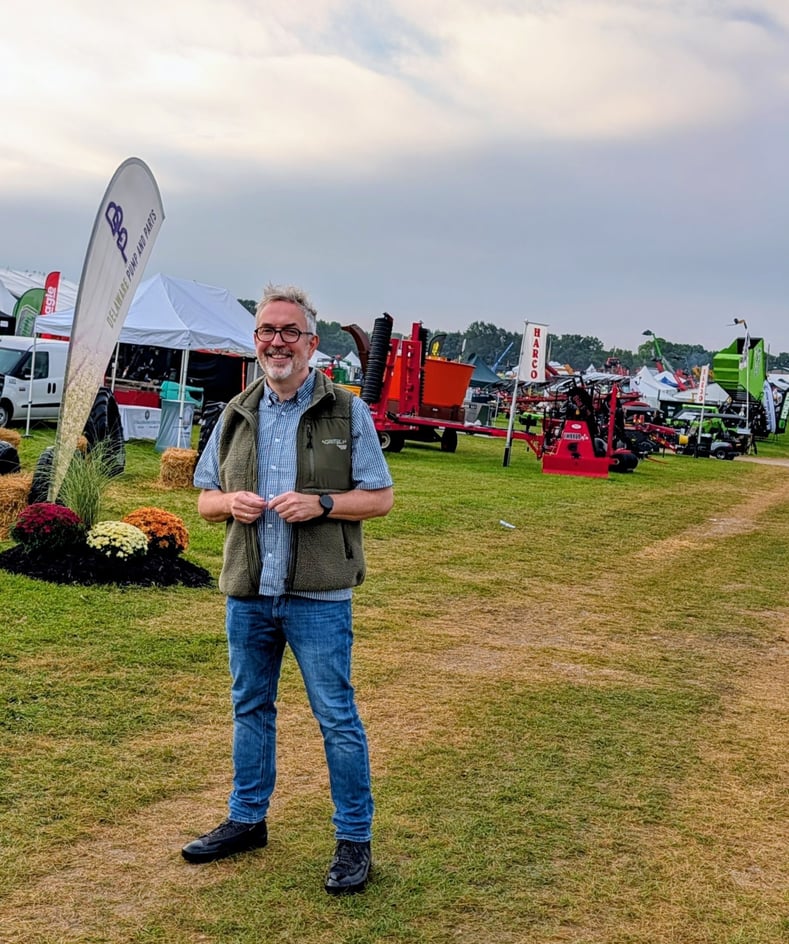
I was at Canada’s Outdoor Farm Show in Woodstock, Ontario, and all around me, Norwegian companies were talking directly with Canadian farmers. Not in a meeting room or a delegation lounge, but right out in the field.
This was the trade show we mentioned when we returned from Ontario in May. At that time, we promised to come back with members who were ready to take concrete steps. And that’s exactly what we did.
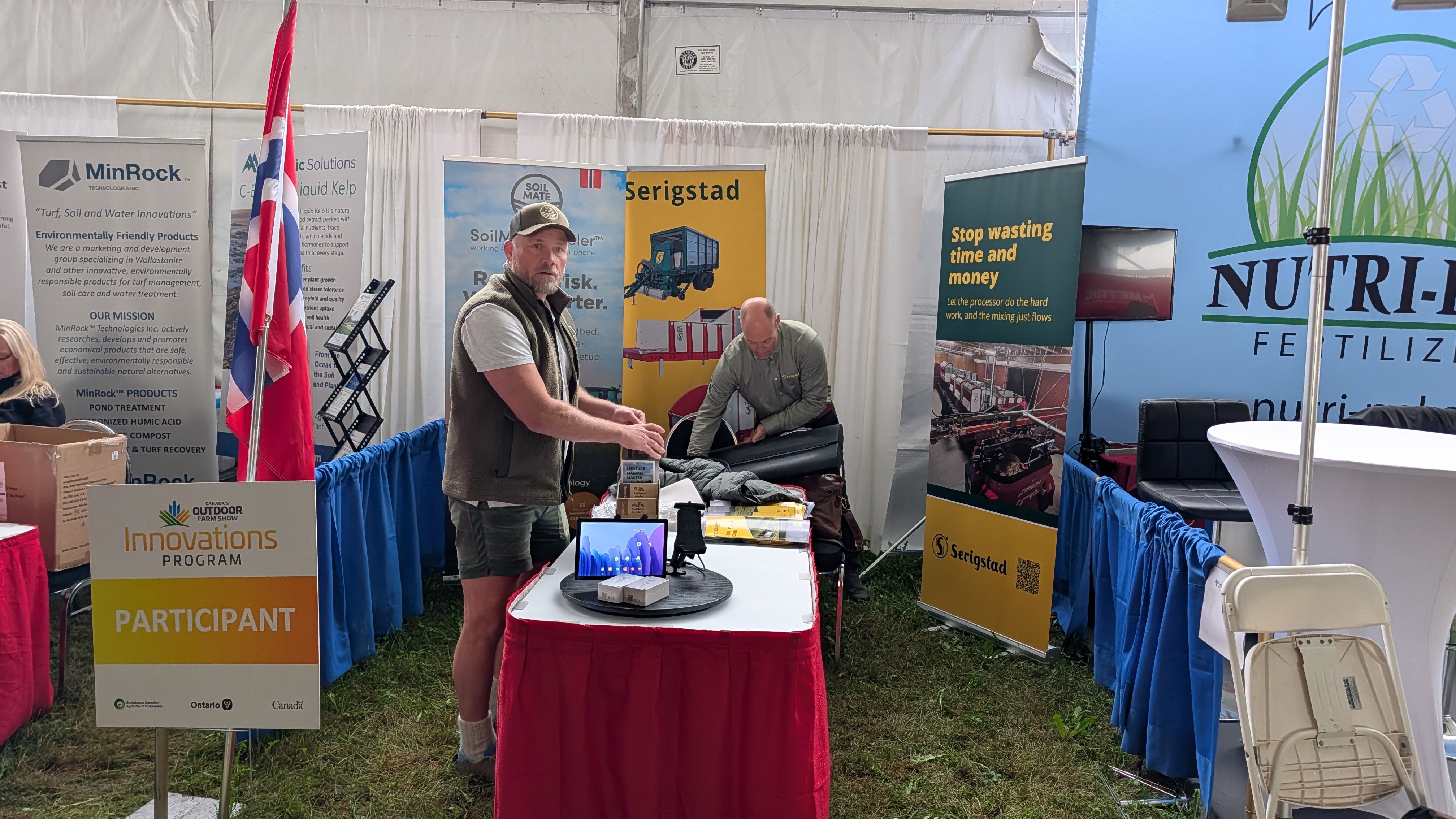
There stood Serigstad AS, which has been manufacturing feeding equipment since 1864, side by side with SoilMate, a seven-year-old company whose sensors tell farmers whether their equipment is positioned correctly. Different levels of experience, but they tackled the market together. Serigstad shared its meetings with SoilMate. SoilMate learned about the industry from a company that has been doing this internationally for decades. At the same time, the questions from the new company prompted the established player to take a fresh look at the market.
This is cluster collaboration in action. We bring together companies that need each other to move forward.
Dinners and craftsmanship
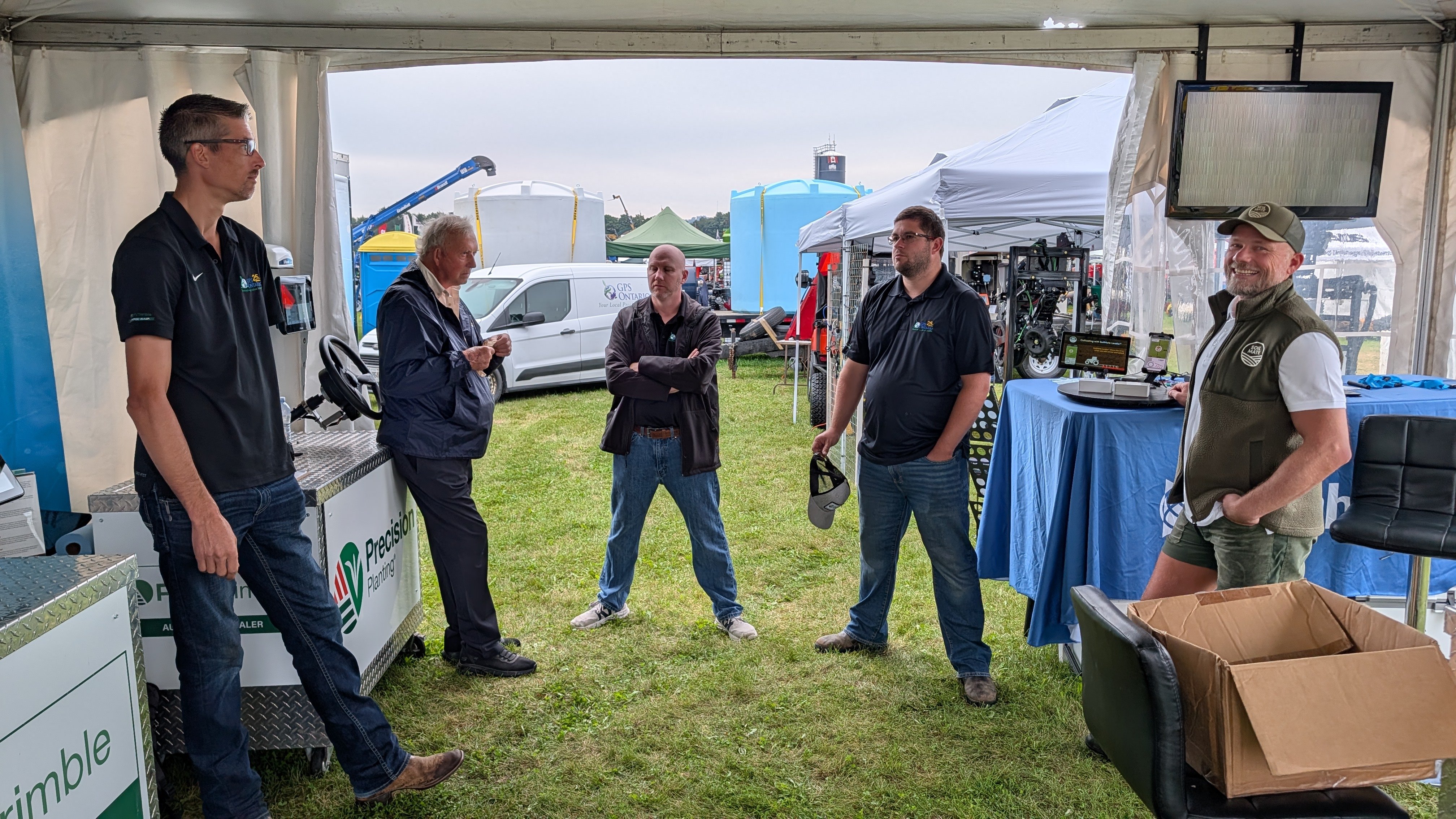
Much of the value is created after the trade show closes. In the evenings, we spent many hours over dinner. How do we address this market? Which tactics work, and which don’t? Where can we collaborate? Certification, on-farm testing, joint project opportunities, and capital strategy were topics we discussed. The real value lay in those hours, long after the official meeting schedule had ended.
Hamid Shirazi at Innovation Norway Canada secured the booth space for us. Without it, we wouldn’t have been there. From there, we did the legwork ourselves. We built the booth. We scoured Kitchener for a Norwegian flag and ironed it before the trade show opened. Most importantly: We actively sought out dealers and engaged directly with the farmers. That’s how SoilMate landed a Canadian dealer agreement right on the trade show floor. Through a conversation with a farmer who stopped by the booth, asked about a local dealer, and made a recommendation.
The people behind it
A dealer agreement is, ultimately, a relationship between people. You can compare margins and coverage on paper, but what determines whether it works over time is whether the other party actually has your best interests at heart.
We noticed the difference right away. Some respond politely but evasively. Others start thinking out loud on your behalf, suggest customers you should talk to, and call someone they know while you’re standing there. Those who go the extra mile before any agreement is in place are usually the same ones who do so afterward, when a machine is down and a farmer is getting impatient. Shared values and respect for the fact that both parties should be able to benefit from the relationship are important. The right type of dealer is also important: The family-run specialists are open to new ideas. The brand-locked chains are not.
None of this is something you can figure out via email from Norway. That’s why we travel. A supplier far away is completely dependent on someone locally taking ownership when something goes wrong, and that trust is built face-to-face, not in a contract.
Two products, same equation
The SoilMate Leveler measures the angle between the tractor and the implement. If the fertilizer spreader is misaligned, the spread pattern changes, and the farmer pays for pesticides and fertilizer that end up in the wrong place. The same misalignment wears down the implement over time. Serigstad’s round bale cutters solve the corresponding problem in the barn: a precise cut and even feed output result in less feed waste and higher intake by the animals.
Canadian farmers understood this immediately. We never had to explain why precision in inputs or feed utilization matters. They calculated it themselves, in their heads, while we were talking.
Systems must communicate with each other
Norwegian companies excel at sensor management and data capture. For our solutions to make a difference in Canada, they must integrate with the systems farmers already have. Standardization and open APIs, along with a willingness to integrate where it makes sense, rather than insisting on being the center of the farmer’s ecosystem.
The demand from the Canadian side is clear: does the machine or sensor make the job faster, cheaper, or safer from day one? Or can the solution replace labor? Canada is projected to face a shortage of over 100,000 agricultural jobs by 2030. This isn’t a trend—it’s already an operational reality.
Farmers there expect a return on investment within three to five years. That figure is tied to profit margins. Canadian agriculture had CAD 102.2 billion in cash receipts in 2025, CAD 83 billion in operating expenses, and CAD 8.3 billion in realized net farm income. That’s a margin of about eight percent. In that context, three to five years isn’t a negotiating starting point—it’s the math.
Small farms by Norwegian standards
When we analyze the market, it’s easy to get fixated on the massive farms that account for the lion’s share of agricultural revenue. And they do: farms with at least $2 million in revenue make up 4 percent of all farms but account for over half of operating revenue. But we cannot ignore the smaller players. A Canadian “small farm” is still a large farm by Norwegian standards. The average farm in Ontario was 101 hectares, about four times the size of an average Norwegian farm. The dynamism, the willingness to try new things, and the short decision-making processes are often found precisely here.
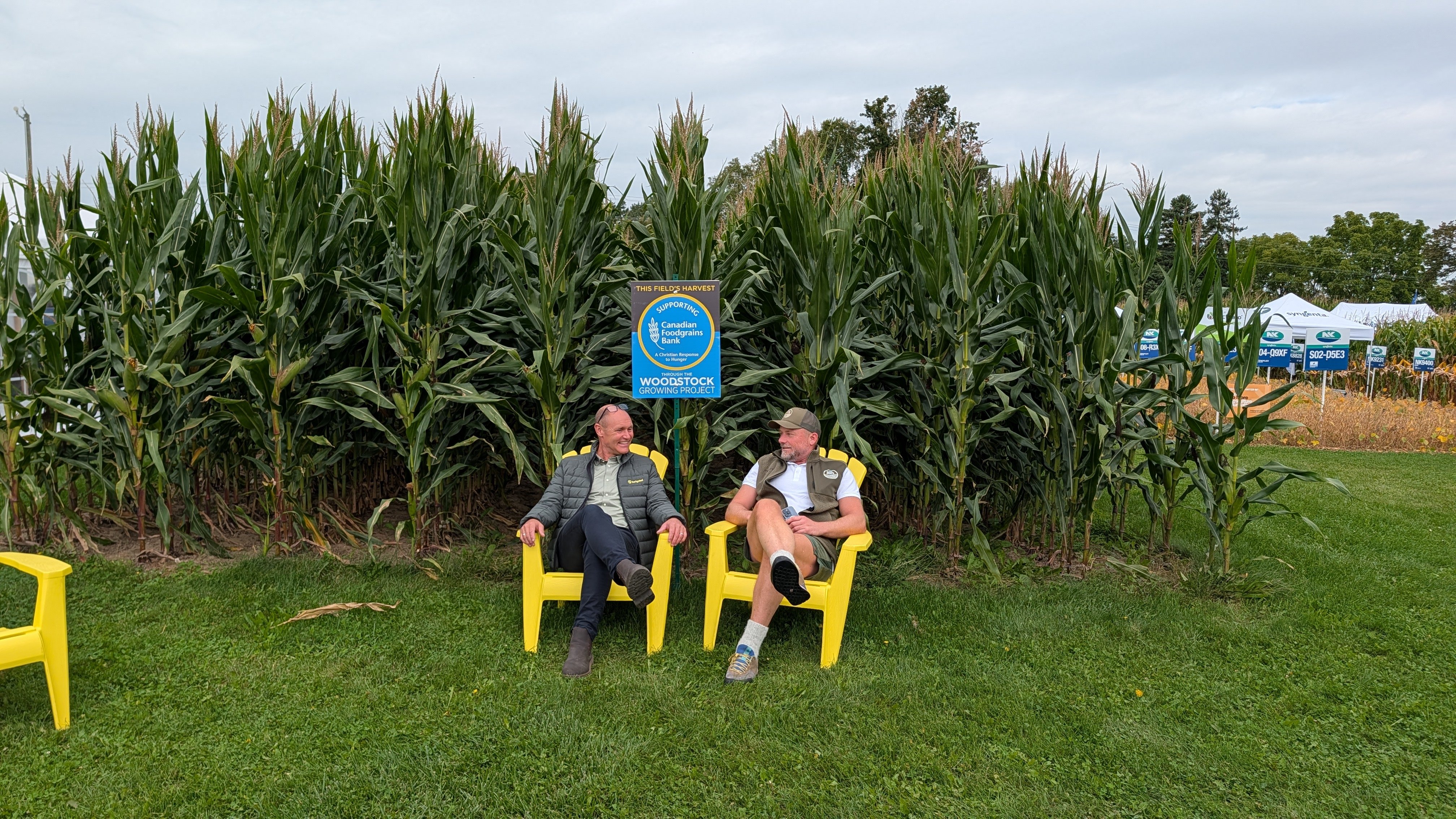
The geopolitical window of opportunity
The timing is no coincidence. With the U.S. closing itself off behind tariff walls under Trump, Canada is forced to look toward new partners. Norwegian agricultural machinery and technology products enter Canada duty-free through the EFTA agreement, on the same terms as EU products do under CETA.
Then there are the support programs. SCAP, the Sustainable Canadian Agricultural Partnership, is a five-year agreement between federal, provincial, and territorial authorities totaling 3.5 billion CAD, running from 2023 to 2028. One billion is allocated to purely federal programs. The remaining 2.5 billion is cost-shared—60 percent federal and 40 percent provincial—and is delivered through each province’s own programs. The money goes to the farmer, not the supplier. The cost-sharing ratio can reach up to 65 to 75 percent in some of the technology programs.
A Canadian farmer considering Norwegian equipment therefore does not necessarily have to bear the investment alone. That’s a point worth bringing up in the conversation.
What we take home
A cluster is only as good as its understanding of its members’ reality. This week, that understanding shifted.
We now know what a Canadian farmer asks before considering a purchase: who will fix the machine if it breaks down in the middle of spring planting, whether the equipment is CSA-certified or has undergone Field Evaluation, and whether the investment will pay for itself within three to five years. We know which dealers actually stock a new product and which ones are locked into a single brand. These are questions we can now ask our members before they travel, not after they’ve spent a week on the trade show floor and learned the answers the hard way.
This doesn’t just apply to Canada. The structure of the questions is the same regardless of which market a member is entering, and it fits right into our “How to Enter” framework. Every trip like this makes the next member company better prepared than the last.
This is what cluster work is really all about. It’s not just about opening doors from an office in Stavanger. It’s about traveling out, setting up the booth, understanding the technology, and standing at the door alongside our members.